Introduction
Recently, I published a new book entitled Light and Life – Images and Verse: Adventures in Creation. This is my first non-academic book in many years, and it explores the relationship between image and the written word, primarily from a photographic arts-based perspective. It also looks at the interplay that using multiple forms of communication can bring and how this can increase enjoyment and, as a consequence, help form a deeper meaning than could otherwise have been created from using just one form of representation.
The images used in this book are a small selection from the Gimme Five Creations (our family business) collection that have been paired with Haiku verse, and later in the book, fuller descriptions of each image for those who are interested.
Haiku, if you are not familiar, is a traditional Japanese three-line poem of 17 syllables, following a 5-7-5 syllable structure. The reason this style of verse was chosen for this publication was due to its ability to capture a brief, vivid moment in time, as do the associated images. Haikus are typically characterised by unrhymed, concise language, aimed to evoke emotion or insight rather than tell a long or full story (Geyer, et al., 2020). It was chosen for this book with the view of evoking an enhanced sensory and emotional response to each image, but a response that would not distract from the image itself.
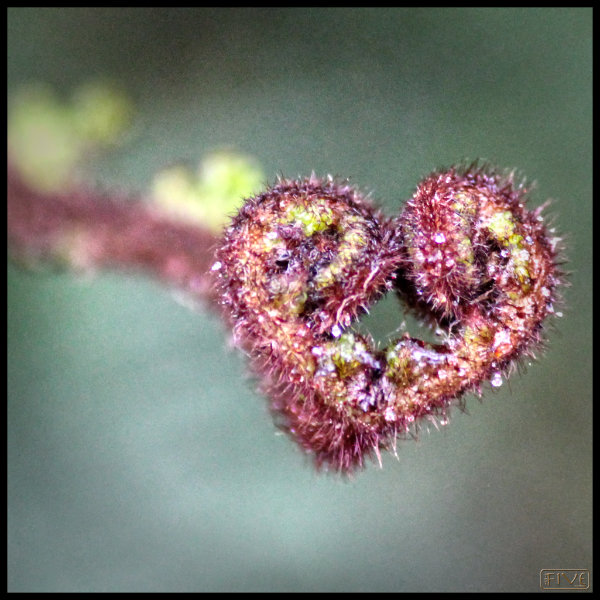
Love in different places
Spring forth love and life
grow ever strong over time
deep down in the soul.
- Image description: Again, in the Blue Mountains in New South Wales, this Soft Tree Fern has juvenile shoots that are often described as looking like love hearts. Anything that reminds us and brings us back to the notion of love is a good thing, particularly in a world so full of distrust. It is good to be reminded of this in whatever way we can be.
This first book, in what will be a series of books covering different genres of images from the Gimme Five collection, contains images and verse associated with select plants, animals and scenes. The images are quite eclectic in nature and celebrate, in many cases, a slightly different way of seeing the world around us, represented in both image and verse.
The subtitle of the book, ‘Adventures in Creation’, provides an indication as to the main intent of the book, one that looks at creation from a number of different perspectives. Firstly, there is the creation of the image, or the act of using a visual device to deliberately frame and capture a moment from reality, resulting in a recorded image; then (secondly), the creation of the verse to enhance the image insightfully, playing on a range of multimodal devices (metaphor, symbolism, pathos, nostalgia or beauty) to explore different expressions in the creative act. But it also celebrates the creation that is being represented in the image, that is, either a human creation or a god creation. In all, though, this book looks to share the adventures undergone in creating this work as a meaningful whole. Lastly, there is a fuller description of each image to provide the reader with a deeper understanding of what is being captured and communicated if it is not immediately obvious from the other two forms; these are there to ‘create’ a deeper awareness of what is being communicated. However, this happens later in the book to lessen the cognitive load on the reader (Ciccione, et al., 2025), which could potentially cloud the original intent.
For those unaware of my professional past, my undergraduate degrees are in Fine Arts, prior to going on to do postgraduate studies in education. I first graduated from Prahran College (art college) in Melbourne in 1981 with a three-year Diploma (in those days) in Photography. Importantly, I had studied under Athol Shmith and John Cato, along with other lecturers who strongly influenced my aesthetic. Athol and John were two highly respected Australian Photographers, and the Course itself was primarily designed for fine art photography, rather than commercial photography (for this you needed to go to RMIT). I then, eventually, worked in photography for the next 20 years (the last 11 working for a university), whilst also doing my further studies in education, eventually transitioning to an academic career, which I pursued for the next 25 years. So, after a career in higher education spanning some 35 years across 5 universities, it was time to return to my creative roots and to start to be more productive in that space again, whilst not fully abandoning my strong ties to education.
Importantly, and to provide further context for this work, in my academic career, I have previously written extensively on multimodality (also read multiliteracy) and how we can and should use multiple forms of media and communication to more fully convey key concepts to our students. In fact, this was the topic of my first book, back in 2010, entitled Multimodal Design for Blended Course Delivery: Developing and Evaluating Design Heuristics for a New Paradigm in Student Engagement.
With this background in place, we will now explore the different uses and interplay of image and the written word, and the role that multimodality (multiliteracies) plays in this, using excerpts from my latest book as the primary examples to illustrate this relationship. We will look at some other tried and true tools and techniques (textual and visual) that have, and can, be used to further enhance our understanding of the concepts being communicated, with multiple forms of communication, to explore and clarify these and other concepts.
Of course, much of this has been made so much easier since the advent of digital imaging and the ability to use the internet to distribute and propagate an image for mass consumption, and yet old (traditional) habits of not fully appreciating the value of multiple representations still persist. It has also become way easier to self-publish and distribute online (e-print) or in print. So, the question is, how then to lift this now commonplace phenomenon (either online or in print) to the next level of richness.
This concept is certainly not new; in fact, when thinking about these things, I am often reminded of the opening lines of the book now known as Alice in Wonderland from 1886, which read:
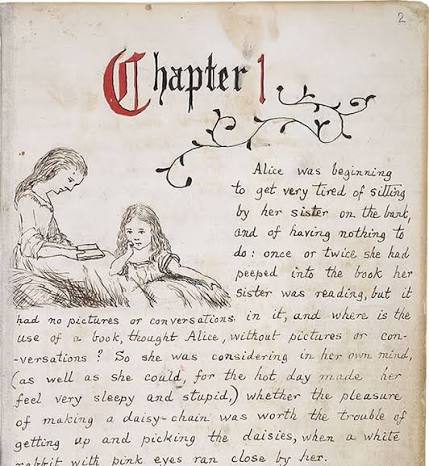
“Alice was beginning to get very tired of sitting by her sister on the bank, and of having nothing to do: once or twice she had peeped into the book her sister was reading, but it had no pictures or conversations in it, `and what is the use of a book,’ thought Alice `without pictures or conversation?’”
- Carroll, L. (1886). Alice’s adventures under ground. Public Domain. From the original manuscript by Lewis Carroll
Multimodality
People are different. Some people will prefer the image, while some will prefer the verse, while others still (not mutually exclusive to either) will want to know more about the image, where it is from, and want further background information. That being the case, one of the fundamental precepts of modern communications is multimodality and how we promote an interactive approach to these communications. This concept has been developing for many decades now, but has systematically become more prominent over recent years in many different fields of engagement, as “fostering creativity and encouraging individuals to make choices regarding how they present and share their ideas… can resonate more deeply with audiences in various contexts”(Dewey, 2018). Indeed, Donaghy et al. (2023) state that “contemporary communication is increasingly multimodal in nature” (p.6). And Rodríguez-Arcos (2024) takes this thought further, suggesting that with the advent of modern digital and social media, we are actually in the ‘multimodal era’, where there are “new codes and elements that challenge traditional definitions of text and the translation field itself” (p.111).
At its core, Multimodality is a communications theory that examines how we as individuals and groups transmit and receive information using various modes of communication. It recognises that ideas are now conveyed not only through language (both written and spoken) but also through visual and expressed auditory means (also through the use of screen readers), enhancing the effectiveness of communication (Dewey, 2018).
Multiliteracy
First, let me clarify how multimodality relates to multiliteracies: to some degree, they are intertwined, though still distinct concepts. Multiliteracies, as originally conceptualised by the New London Group (1996), encompasses multimodality. While multiliteracies addresses social diversity, globalised communication, and various forms of media/technological literacy (visual, media, information), multimodality provides specific semiotic tools (how images, sounds, and words interact) and looks to analyse how those meanings are built. The practical application of multiliteracies is that it provides the raison d’être or ethos for multimodality (valuing diverse cultural and digital contexts), and using multimodal texts (graphic, images, words, video, audio, etc.) as the way in which multimodality is put into practice, informed my multiliteracy and potentially other theories, such as Universal Design (Hamraie, 2016).
Why image and verse
Despite the obvious differences in medium and technique, poetry and visual art share a deep connection through their ability to transform thoughts and feelings into symbolic and imaginative forms. Historically, poetry and visual art have continuously influenced one another across different cultures and artistic movements (Marshell 2023). Ancient civilizations often combined visual symbols and poetic language in religious manuscripts, murals, sculptures, and storytelling traditions (Powell, 2024). For example, during the Renaissance and Romantic periods, artists and poets frequently explored similar themes such as beauty, nature, spirituality, love, mythology, and human emotion.
The interaction between words and images is an important part of the aesthetic in my book. And that’s quite a natural thing, as there are well-established connections between poetry and visual art that manifest through imagery (physical and mental). Poets create visual experiences through descriptive language, metaphor, symbolism, pathos, and other sensory devices, allowing readers to imagine scenes, emotions, and symbolic meanings mentally (Marshell 2023). Similarly, visual artists often create works that possess poetic qualities through lighting, mood, symbolism, rhythm, and narrative suggestion. In this case, I am using photographs to communicate emotions and abstract ideas in ways similar to poetic expression (Marshell).
Dr. Amine Ferhani (2026), from the Centre for Economic Transformation Studies, Tlemcen Research University, in Algeria puts this really well when she writes:
“The relationship between poetry and visual art has remained an important aspect of artistic and cultural expression throughout human history. Both forms of art communicate emotions, ideas, memories, imagination, and human experiences through creative representation. While poetry uses language, rhythm, metaphor, and symbolism to create meaning, visual art relies on color, composition, texture, form, and imagery to express emotional and aesthetic experiences.” (p. 2473)
Other tools in the creative kit bag
I allude above to the use of other literary and visual devices to illustrate ideas and promote emotional responses, to communicate an idea. These include the use of metaphor, symbolism, pathos, nostalgia, abstraction and beauty. These are only some of the devices that have been employed by artists over the centuries, but have been chosen here as these are the main ones used in my book (though I am sure others will read more into some of these works).
Metaphor
Metaphor functions by creating imaginative comparisons between different objects or experiences. In poetry, metaphors compare one idea with another to produce emotional and intellectual depth (Shorakhmetov, 2024). A poet may describe life as a journey, time as a river, or memory as a shadow to communicate complex experiences symbolically. In photography, metaphors are created using imagery, light, composition, colour, and artistic arrangement (Haoze, 2024). For example, fragmented landscapes, distorted figures, or an empty space may metaphorically represent trauma, alienation, or some other kind of psychological construct.
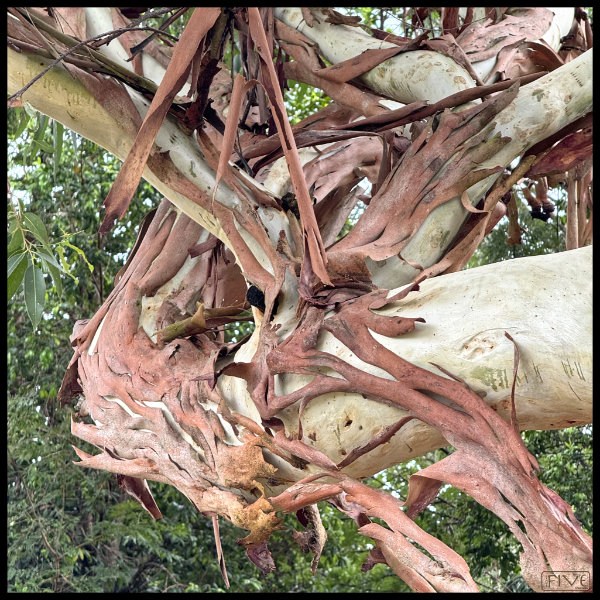
Moving on
Is it time to say
I am done with past concerns
time for a fresh start.
- Image description: Many Australian eucalypts, also called Gum Trees, annually shed their bark (called decortication) as the trunk expands rapidly during the warmer months. Instead of falling all at once, the old bark peels away in long ribbons, plates, or flakes to reveal a fresh, vividly coloured new layer beneath. This isn’t just for aesthetics; it is a vital survival mechanism for the tree, as part of a natural hygiene routine, ridding the trunk of parasitic insects, fungi, mosses, and harmful pathogens. The inner bark can even photosynthesize, providing extra food and energy for the tree’s growth
Ferhani (2026) writes that,
“Metaphor and symbolism strengthen visual imagery by transforming ordinary objects and scenes into deeper artistic meanings. A broken mirror may symbolize fragmented identity, a storm may represent emotional conflict, and a fading landscape may reflect loss or social decline. Such symbolic visual imagery allows poetry to communicate complex emotional and philosophical ideas in imaginative ways” (p.2473).
Symbolism
Symbolism like metaphor are essential artistic devices in both poetry and visual arts, allowing artists to communicate deeper meanings, emotions, and abstract ideas beyond direct representation (Marshell 2023). Through symbols and metaphoric expression, creative works become layered with multiple interpretations and emotional significance. Both poetry and photography (and other visual arts) use these techniques to transform ordinary objects, images, colours, and experiences into powerful representations of human thought, culture, memory, spirituality, identity, and emotion (Marshell 2023).
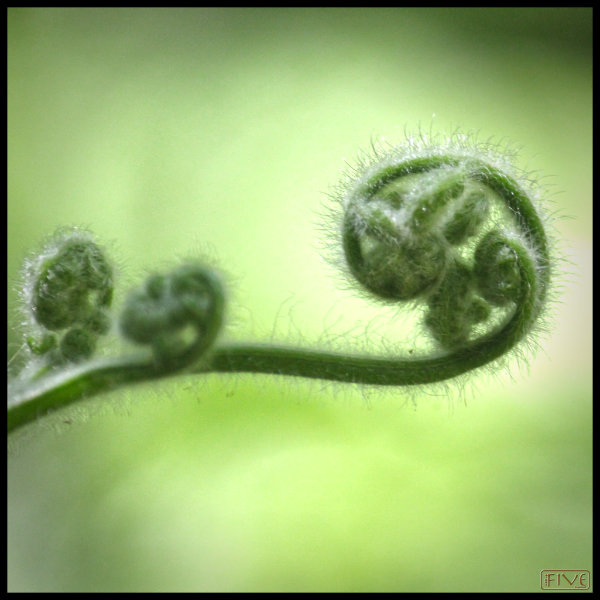
Opening up
Life’s unfolding dreams
holds hope and vitality
rolling forth in us.
- Image description: The new shoot of a Tree Fern unrolling, deep in the forest at Ravensbourne National Park in Queensland. They thrive in the moist, shaded microclimates created by the park’s tall rainforest canopy and trickling streams (as do leeches,by the way), as they grow alongsideancient Bunya and Piccabeen Palms. These are some of the last remnants of the vast subtropical rainforests that once blanketed the Great Dividing Range
Symbolic representation allows audiences to interpret artistic meaning through imagination and linking this to cultural understanding, rather than through direct explanation (Wang et al., 2026). However, in the case of this book, extra explanations are provided, but not appearing with the image and verse; they appear later in the publication for those wishing to know more. As the intent was not to distract the reader from ‘the moment’
Pathos
In the field of art and literature, pathos describes the emotional power of a scene (https://www.merriam-webster.com/dictionary/pathos). This can often be used in a negative way, drawing on scenes that pull on the heartstrings, to help make an ‘abstract problems or issues much more concrete and real’ (McGeough, et al., 2026, p143), but it doesn’t have to be. In my case, it is used in a positive or whimsical sense to evoke memories of fun days in one’s youth, as seen in the image ‘Fond farewells’ (below). Pathos is also often seen used hand in hand with nostalgia, but not exclusively, as an image does not necessarily have to be historical. One must also use this method sparingly, as using it too often can undermine its effectiveness (McGeough).
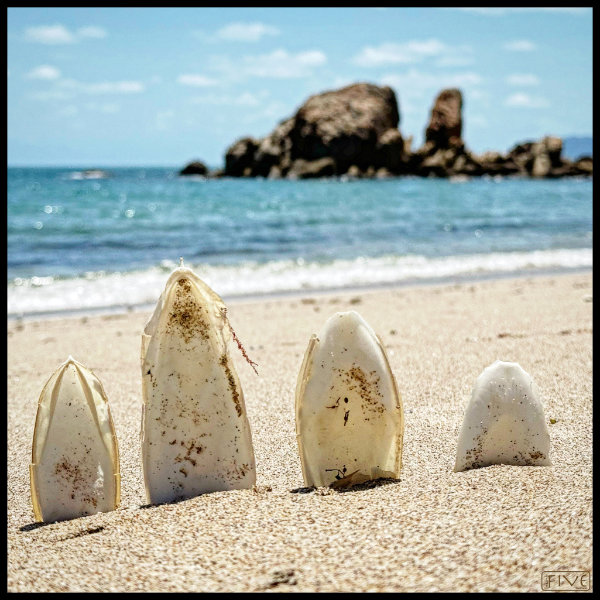
Fond Farewells
Fun days on the beach
collecting stray cuttlebones
things that intrigue us.
- Image description: As kids we loved to collect what we called Culltle Fish on the beach. Of course they were not the fish itself, but we didn’t let the truth get in the way of a good story, they are cuttlebones. These cuttlebones were found on the beach at Horseshoe Bay in Bowen, in Northern Queensland. There were heaps of them, so, I deduced that this was clearly where cuttlefish come to end their days and thus I set up this memorial for them.
The combination of a concrete visual image with concise haiku verse and then linking this with an emotional resonance (pathos) can be seen to create deeper meaning by transforming a simple observation into an unspoken “aha” moment that connects with the reader/viewer’s core feelings (Ferhani, 2026).
This is because Imagery, particularly photographic images, establishes a link with reality and can directly link the viewer to the physical world, thus a form of ‘showing over telling’. So, instead of naming a vague concept like sadness or joy, a clear picture presents a plain fact that lets you feel the truth yourself (if you can understand what the picture is representing).
This then, when linked with Haiku verse, further shapes the structure, creating a resonant spark in the space between the two. Due to its short, 17-syllable structure, there is a focus on precision of language, making every single word earn its place. Thus, the poem and the photo together act as a dialogue rather than an explanation, where the text adds an emotional dimension to the picture. In actual fact, it is this juxtaposition that forces the brain to bridge the gap between two ideas, sparking deeper thought.
Where pathos then emerges is when these two elements can create an extra emotional depth, by connecting the outer scene to deeper inner human experiences. The emotion is never explicitly spelled out; it rises naturally from the relationship between the image and the verse. Thus, Pathos appeals to the audience’s shared human experiences (Arianto et al., 2026).
As in the example image above, if we then add an element of fun or humour into this mix (either visual or textual), this combination introduces the powerful literary tool of juxtaposition. Interestingly, when this light-hearted, playful tone is linked with the rigid structure of a haiku and the emotional weight of pathos, you create a complex, bittersweet layer of meaning. immediately relatable, as humour tends to lower the audience’s guard, making us more receptive to the deeper emotional message.
Nostalgia or Calling on History
The non-traditional interplay of photographic image and haiku creates a new and powerful link to a Japanese tradition known as Haiga (painting combined with haiku). A photo Haiga is a modern adaptation of this, with the photo replacing a hand-drawn ink brush painting (sumi-e) and computer-based fonts replacing handwritten calligraphy. The connection with the work is associated through the capturing of a fleeting historical moment while calling on deep layers of nostalgia with minimal words (The Great Margin, 2021).
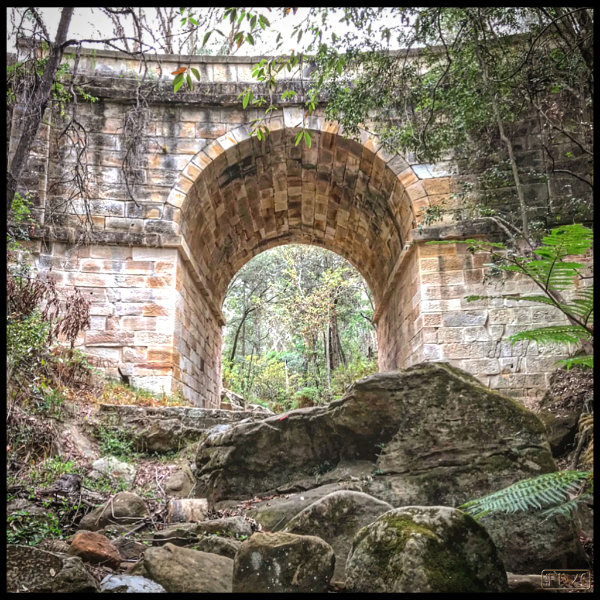
Hope through discovery
Built on mountain high
by convict force long ago
now beauty its prize.
- Image description: The Lennox Bridge in the Blue Mountains, is a wonderful find, it is the oldest stone arch bridge on the Australian mainland and designed by master stonemason David Lennox. It’s a single-span bridge built in local stone in 1833 using unskilledconvict labour, that took them about a year. No longer on the main road, the bridge used used to carry all the traffic to western New South Wales from Sydney until 1926.
In these instances, an image is often minimalist; it could be nature-focused, a quiet landscape, a single flower, or capturing shifting light, with the haiga (haiku) focusing on some sensory details through the use of poignant and concise words. Importantly, the picture and the words should not repeat each other; instead, they create a space where the viewer feels an emotion by triggering a memory or providing a sense of presence.
Abstraction
Linking an abstract image with a haiku verse creates a deep sense of meaning by triggering (hopefully) a psychological phenomenon called synergy, or synesthesia (Bullock, 2023), where the visual and textual elements multiply rather than mirror each other. This is because neither the image nor the poem provides a literal explanation; thus, the human brain is forced to actively bridge the gap, generating personal insight and emotional resonance.
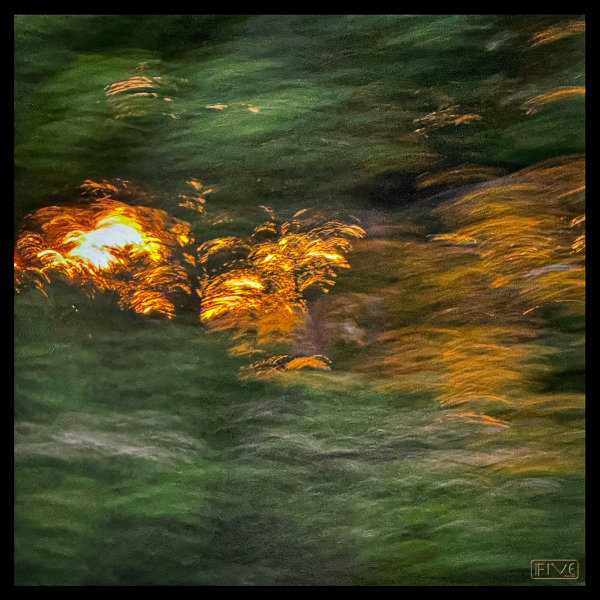
Pace of life
Life moves so quickly
there is beauty to be seen
colours and movement.
- Image description: As the sun sets, light splashes on the car where gaps appear in the trees, revealing the glorious sunset on the other side. The speed of the car and the transitory explosions of light provide the perfect metaphor for the pace of life and the glimpses of hope we get as we travel along life’s road. However, we will soon emerge from the woods, and then all will be revealed as the warm light encompasses us at the close of day.
When creating an abstract image with a Haiku, it is important to consider the art of omission. That is, Haiku relies on yutori (open space) and karumi (lightness), leaving details out. Similarly, an abstract image strips away a literal subject. When pairing these, you are invited to feel. In a sense, your mind is creating a third image where the meaning you make of this combination exists only in your imagination. The abstraction prevents the brain from passive consumption, transforming the viewer from a spectator into an active co-creator of the artwork’s meaning. Unlike when you use a recognisable image, replacing this with an abstract visual creates a powerful, modern juxtaposition that forces the viewer to find hidden connections. It is hoped that when a person looks at an abstract image while reading a haiku, they don’t just see a pattern or colour; they experience the physical sensation.
Because the image is not a literal illustration of the poem, and the poem is not a direct caption. Instead, an abstract photograph that focuses on lines, shapes, textures, or light creates a gap that the mind needs to fill, in the same way the haiku requires the reader to, in a sense, read between the lines.
Beauty
In the case of the book ‘Light and Life…’, it is conceived that beauty can bridge sensory experience with our understanding of the things around us to create a new resonance of meanings, through the pairing of image and verse, the aesthetic and the conceptual.
It is in this act of meaning-making that I first look to provide a visual anchor (the image or aesthetic) to then link with the verse (the conceptual), thereby providing a deeper cadence or tangle depth to the aesthetic. Together, this can allow people to process the emotions that logical flow from each, that, when read alone, cannot fully capture. Is this hand-holding? I think not. Rather, it is a mechanism to ensure that the intended meaning is transmitted through two semi-abstract concepts working together. Eskandari, Khatin-Zadeh & Banaruee (2025), support this when they suggest that an aesthetic metaphor (in the image) is used in conjunction with verse (the conceptual), the ‘conceptual and perceptual (visual) beauties are enhanced at the same time. These two types of beauties may interact and strengthen each other although, in themselves, they are distinct types of beauties (p.4). This is further supported by Makhmudovna (2024) who suggest that textual metaphors and imagery, while inherently subjective, remain indispensable tools for articulating and experiencing the multifaceted nature of beauty.
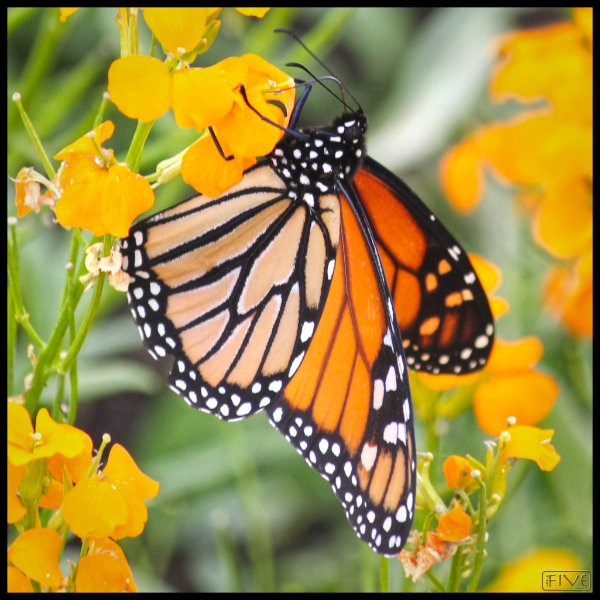
Colours of light and life
What mind could conceive
such beauty all around us
in flight enthral us.
- Image description: This female Monarch Butterfly (Danaus plexippus) is slightly smaller than its male counterpart and feature visibly thicker, darker black veins running through its orange wings. In her 2 to 5 week lifespan, she will lay between 300 – 1,100 eggs exclusively on milkweed plants. Once mature, she will mate and begin her hunt for the perfect host plant. She uses sensors on her legs to taste the leaves to verify if it is milkweed and then she will lay just one egg per leaf.
This is because true aesthetic beauty is not simply decorative; rather, it can also function representationally to direct the mind toward a larger truth, one that can transcend its initial reality. Philosopher Elaine Scarry, a prominent Harvard Professor and literary theorist notes in relation to this, that encountering beauty stirs an innate human longing for clarity, justice, and deeper comprehension of the world. In her book On Beauty and Being Just (1999), she argues that the experience of beauty is not merely a passive pleasure, but an active, transformative force that radically alters how we perceive reality and treat others. This is particularly true where the intersection of a visual image is with verse, as it amplifies Elaine Scarry’s concepts of clarity, justice, and decentering. When text and imagery fuse, philosophers and critics refer to this multi-sensory encounter as an ekphrastic, or an synesthetic experience. Scarry further argues that beauty jolts us out of our self-absorption by demanding our full attention. In that the image captures the eye instantly, grounding us in a specific, immediate aesthetic moment, while the verse, essentially, slows down time, forcing the mind to decode rhythm, metaphor, and sound. Together, they create an immersive cognitive trap, as the brain is processing both sensory and abstract inputs simultaneously.
Further explanations
Unlike traditional forms of image and Haiku, ‘light and life…” has introduced the third element of a description of each image. This is because the images in this book are not only ‘art’ but are also moments in time that may have further meaning. This is where we reintroduce the notion of multimodality, in that some people may not necessarily get the intended meaning from simply reading the Haiku verse associated with the image, which is just fine, as we all process information in different ways. The descriptions in the book are not long, as that is not the point of the activity, but I trust they are meaningful to the viewer in some way. If they help the reader get a deeper sense of meaning from the image and the verse, my job is done.
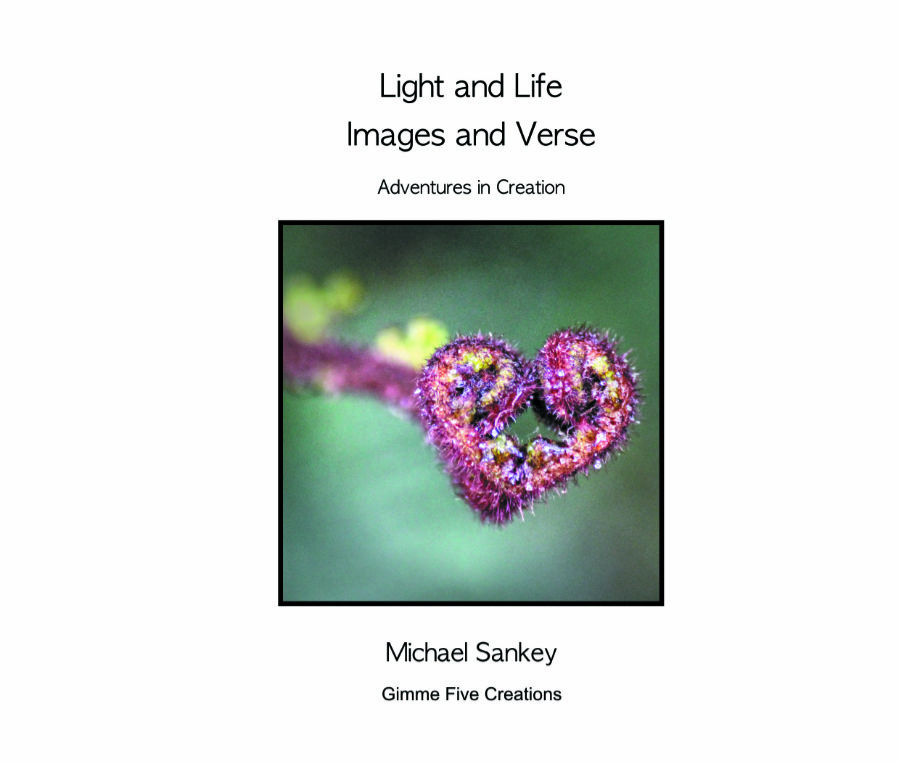
To access a copy of this book please click on this image above.
Or see the Gimme Five Creations page
References
Arianto, M. A., Jufrizal, Haq, M., Oktoviandry, R., & Syafrina, D. (2026). Ethos, pathos, and logos in research article introductions: Persuasive rhetorical practices across research paradigms. Studies in English Language and Education, 13(2), 754–771. https://publications.usk.ac.id/index.php/siele/article/view/1069
Bullock, O. (2023). Synesthesia and Haiku. Juxta: Research and Scholarship in Haiku. Nine. pp 45 – 87. The Haiku Foundation. ISBN 979-8-8659779-6-4. Available from: https://thehaikufoundation.org/juxta/juxta-9-1/
Carroll, L. (1886). Alice’s adventures under ground: Being a facsimile of the original ms. book afterwards developed into “Alice’s adventures in Wonderland.” Macmillan and Co.
Ciccione, L., Caroti, D., Liu, S., Giardino, V., Pasquinelli, E., & Dehaene, S. (2025). The superiority of graphics over text in long-term memory retention. Psychonomic Bulletin & Review, 32(5), 2322–2330 . DOI: https://doi.org/10.3758/s13423-025-02708-3
Dewey, J. (2018). Multimodality. Research Starter. EBSCO. https://www.ebsco.com/research-starters/social-sciences-and-humanities/multimodality/
Donaghy, K., Karastathi, S., & Peachey, N. (2023). Multimodality in ELT: Communication skills for today’s generation. Oxford University Press. www.oup.com/elt/expert
Eskandari, Z., Khatin-Zadeh, O., & Banaruee, H. (2025). Aesthetic metaphor as a tool for enhancing perception and conception. New Ideas in Psychology, 78. 101166. https://doi.org/10.1016/j.newideapsych.2025.101166 .
Ferhani, A. (2026). The relationship between poetry and visual art. The journal Corps et Psychisme: Recherches en Psychanalyse et Sciences Humaines. 13(1). pp 2473-2478. Available from: https://corpsetpsychisme.com/cp/article/view/391
Geyer, T., Günther, F., Müller, H.J., Kacian, J., Liesefeld, H.R., & Pierides, S. (2020). Reading English-language haiku: An eye-movement study of the ‘cut effect’. Journal of Eye Movement Research, 13(2). pp 1-29. DOI: https://doi.org/10.16910/jemr.13.2.2
Hamraie, A. (2017). Building access: Universal design and the politics of disability. University of Minnesota Press.
Haoze, W.U. (2024). Metaphors of the lens: symbolism and visual expression in cinematography. Region – Educational Research and Reviews, 6(9), pp.126-130. DOI: https://doi.org/10.32629/rerr.v6i9.2912
Markidis, S., & Willcox, M. (14 Jul 2026): Material metaphor: somatic writing for platform studies, New Writing, The International Journal for the Practice and Theory of Creative Writing. DOI: https://doi.org/10.1080/14790726.2026.2699196
McGeough, R., Rudick, C.K., McGeough, D.D., & Golsan, K.B. (2026). Communication for College, Career, and Civic Life. Iowa State University Digital Press. Ames, Iowa.
Makhmudovna, Y. G. (2024). Metaphors and Imagery in the Concept of Beauty. American Journal of Education and Learning. 2(5). https://advancedscienti.com/index.php/AJEL/article/view/285/567
Marshall, E. (2023). How visual art and poetry interact. Main Issues of Pedagogy and Psychology, 1(3), 13–21. https://miopap.com/en/article/view/13
Powell, B. B. (2024). Greek Poems to the Gods. University of California Press.
Rodríguez-Arcos, I. (2024) Advertising translation in social media: Multimodality and simultaneity in a global campaign. Babel: International Journal of Translation / Revue Internationale de la Traduction / Revista Internacional de Traducción, 70(1-2). P. 111. DOI: https://doi.org/10.1075/babel.00373.rod
Scarry, E. (1999). On beauty and being just. Princeton University Press. https://doi.org/10.2307/j.ctt28557b
Shorakhmetov, S.S. (2024). The Power of Metaphor: Exploring the Impact of Figurative Language in Literature. Texas Journal of Philology, Culture and History, 28, pp.11-14. DOI: https://doi.org/10.62480/tjpch.2024.vol28.pp11-14
The Great Margin. (2021). Conversation 11: Writing Haiku: Haiga – Where Image and Haiku Meet. Available from: https://thegreatmargin.org/conversations/conversation-11-writing-haiku-haiga-where-image-and-haiku-meet/
The New London Group. (1996). A pedagogy of multiliteracies: Designing social futures. Harvard Educational Review, 66(1), 60–93. https://doi.org/10.17763/haer.66.1.17370n67v22j160u
Wang, S., Li, W., Yin, L., & Lyu, M. (2026). When the image loses its shape: a comparative study of college students’ understanding pathways of abstract and figurative art. Frontiers in Psychology, 17. DOI: https://doi.org/10.3389/fpsyg.2026.1762388


